
Understanding CS Soaker Hoses
How Does a CS Soaker Hose Work? Design and Benefits
Water passes through the porous hose wall directly into the planting area. Learn how the CS Soaker Hose works, what benefits it can offer and how the water source, filter, pressure and supply line work together.
The Basics
What Is a CS Soaker Hose?
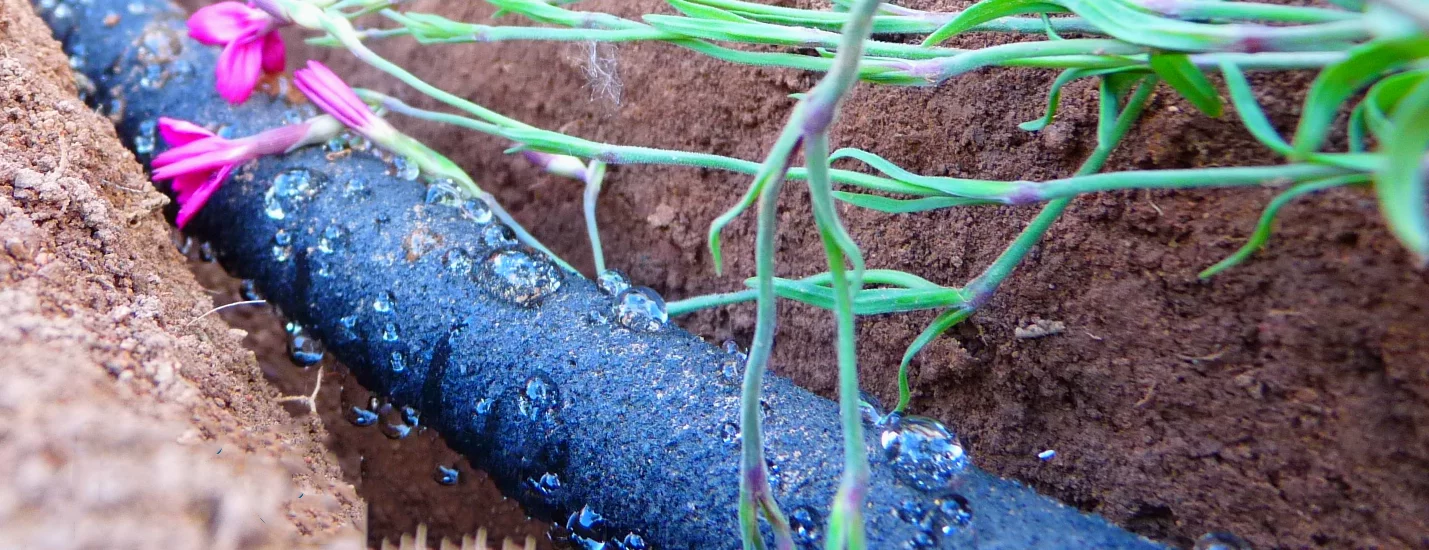
The CS Soaker Hose is a porous irrigation hose. Water passes through its wall along the entire length and can moisten the soil around plant roots when installed close to the soil surface or underground.
Water distribution is not automatically uniform at every point. It depends on factors such as water pressure, available flow rate, hose length, installation layout and soil conditions.
- Water delivery through the porous hose wall
- For garden beds, raised beds, hedges and suitable green spaces
- Can be installed above ground, covered or underground, depending on the plants
- Four product lines for different water supply conditions
Interactive System Overview
What Components Make Up a Soaker Hose System?
These six steps illustrate a typical water flow path. The components required and the order in which they are installed depend on the water source and system configuration. Open each step for more details.
Water SourceWater tap, rainwater tank or pump
The water source determines the available pressure conditions and water flow. For an elevated storage container, CS Pressureless may be suitable if the water column is sufficient. A lower-lying cistern generally requires a pump.
Water FilterTrap dirt particles before they reach the hose
A suitable filter reduces particles that can contribute to deposits and blockages. The filtration rating and flow resistance must be compatible with the water source and available flow rate.
Pressure RegulationMaintain the correct operating pressure for the product line
Startup, Premium and Profi require a suitably regulated pressure supply. A pressure reducer may be necessary. A flow restrictor limits the water flow but does not replace the required pressure regulation. For the gravity-fed Pressureless system, the height difference is crucial.
Supply LineTransport water with minimal pressure loss
Non-porous supply lines connect the water source to the irrigation areas. Their diameter, length, restrictions and elevation differences affect how much water is available under operating conditions.
Distributors and Shut-Off ValvesSupply multiple irrigation runs individually
For longer hedges or multiple garden beds, distributors can supply individual irrigation runs separately. The combined water demand of simultaneously open runs must not exceed the available water flow.
CS Soaker HoseRelease water through the porous hose wall
The hose is installed to suit the root zone. An end plug is normally fitted to the open end. Hose length, pressure, soil conditions and operating time determine actual water delivery and soil moisture.
Essential for Planning
Water Pressure Is Not the Same as Water Flow
Even with sufficient pressure, the water supply may be inadequate for multiple irrigation runs operating simultaneously. Supply lines, filters, distributors and possible elevation differences affect the hydraulic conditions.
Benefits at a Glance
What Are the Benefits of a CS Soaker Hose?
The benefits depend on choosing the right product, installing it correctly and using a properly coordinated irrigation system. No general water savings percentage can be derived from these factors.
Water Delivery Around Plants
The porous hose wall enables water delivery close to the soil surface along the installed length.
Potentially Lower Evaporation
When installed beneath mulch or soil, water delivery close to the root zone can reduce surface evaporation compared with sprinkler irrigation.
Less Leaf Wetting
With suitable installation, leaves are hardly exposed to direct overhead watering. The position of the hose remains crucial.
Suitable for Different Areas
From raised beds and hedges to larger green spaces, irrigation runs can be planned to suit the application.
Automated Irrigation Schedules
With a suitable controller, irrigation can be scheduled and adjusted according to soil moisture.
Materials Containing Recycled Raw Materials
CS Soaker Hoses are manufactured in Germany from a material blend containing recycled tire granulate and polyethylene.
Installation and Maintenance
Keeping Your System Running Reliably
A well-planned hose layout, filtered water and suitable operating pressure help achieve the desired soil moisture. For above-ground installation, covering the hose with soil or bark mulch is recommended.
- Observe irrigation run lengths and installation methods for each product line
- Install the hose without kinks and avoid unnecessary inclines wherever possible
- Check and clean filters regularly
- Check for leaks and proper water delivery before covering the system
- Adjust irrigation duration according to soil moisture
Product Selection
Comparing Pressureless, Startup, Premium and Profi
The table provides initial guidance. For precise operating values, water delivery rates and installation depths, refer to the product-specific technical specifications.
| Product Line | Typical Water Supply | Examples | Straight Run |
|---|---|---|---|
| Pressureless | Gravity-fed with sufficient water column | Elevated rain barrel, tank | Up to 25 m* |
| Startup | Suitably regulated pressure supply | Raised beds, smaller garden beds | Up to 50 m |
| Premium | Suitably regulated pressure supply | Hedges, longer planting beds | Up to 75 m |
| Profi | Suitably regulated pressure supply | Large areas, professional installations | Up to 100 m |
* With CS Pressureless, up to 50 m of actual hose length can be installed in a circular layout. Water is supplied at one end; the other end is sealed with an end plug and is not connected to the inlet. Separate recommendations apply to other installation methods.
FAQ
Frequently Asked Questions About Soaker Hose Irrigation
Quick answers about how it works, pressure, installation and maintenance.
How Does a CS Soaker Hose Release Water?
Water passes through the porous hose wall. How thoroughly and evenly the soil is moistened depends on factors such as pressure, hose length, soil conditions and irrigation duration.
Can Pressureless Really Be Used Without Water Pressure?
Pressureless does not require conventional mains water pressure. However, a storage container must provide a sufficient water column. For straight installation, the maximum length is 25 m; with circular installation supplied from one end, up to 50 m is possible.
Can I Use a Flow Restrictor Instead of a Pressure Reducer?
No. A flow restrictor limits the water flow but does not reliably regulate outlet pressure. If the supply pressure is too high, a suitable pressure reducer is required.
Can the Soaker Hose Be Installed Under Soil or Mulch?
Yes. The installation depth depends on the plants and product specifications. For above-ground installation, covering the hose with soil or mulch is recommended. Sharp kinks should be avoided.
How Long Should the System Run?
There is no single operating time suitable for every system. Initially, check the soil moisture in the root zone and adjust the operating time according to the plants, weather, soil conditions and actual water delivery.
How Do I Prepare the System for Frost?
Shut off the water supply, drain the lines according to the component specifications and store frost-sensitive accessories such as filters, regulators or irrigation controllers in a protected location. General frost resistance guarantees cannot be given for the entire system.
Find the Right Irrigation System
Choose the Right CS Soaker Hose
Water source, pressure, available water flow, hose length and planting area determine the appropriate version. Compare the product lines or contact us for advice.